
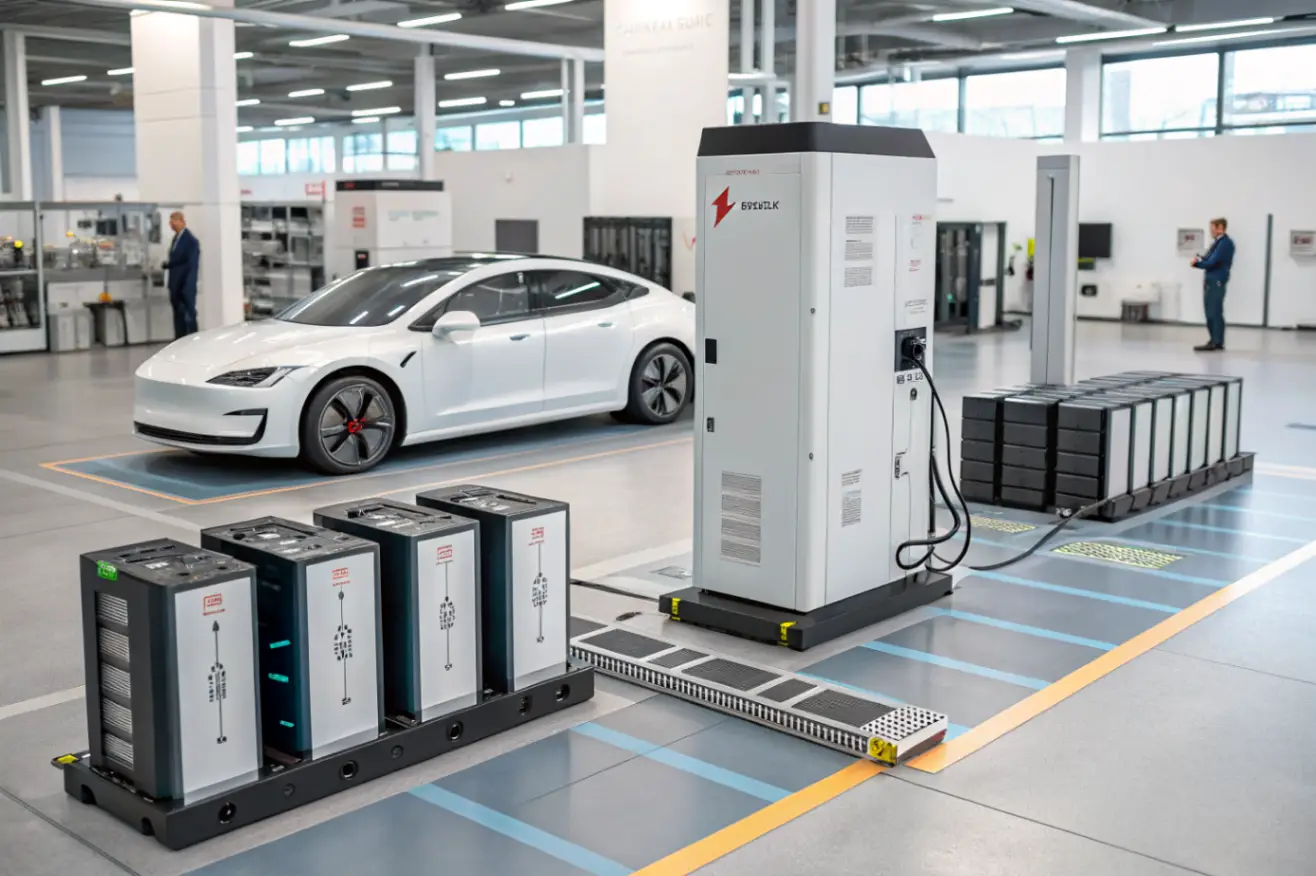
The global transition toward electrification is accelerating, and battery technology sits at the center of this transformation. From electric vehicles to portable electronics and renewable energy storage, the limitations of current lithium-ion batteries are becoming more visible. At the same time, a new technology—solid-state batteries—is gaining momentum and promises to redefine how energy is stored, delivered, and charged.
This shift is not just about improving capacity. It represents a broader change in safety, charging speed, durability, and even how devices and vehicles are designed. As major companies invest billions into research and production, the next few years could mark the beginning of a new era in battery technology and fast charging solutions.
What Are Solid-State Batteries and How They Work
Solid-state batteries are a new generation of energy storage systems that replace the liquid electrolyte found in traditional lithium-ion batteries with a solid material. This seemingly simple change has profound implications for performance, safety, and longevity.
In a conventional lithium-ion battery, energy is stored and released through the movement of lithium ions between the anode and cathode via a liquid electrolyte. This liquid component is flammable and limits how densely energy can be packed into a battery. It also contributes to degradation over time and restricts how fast a battery can safely charge.
Solid-state batteries eliminate the liquid electrolyte and use a solid electrolyte instead. This allows for a more stable internal structure and enables the use of advanced materials such as lithium metal anodes. As a result, these batteries can store more energy in the same space while reducing risks associated with overheating or leakage.
Another important advantage lies in thermal stability. Solid-state batteries are far less prone to thermal runaway, a condition where a battery overheats uncontrollably. This improvement alone has the potential to significantly increase safety in electric vehicles and consumer electronics.
The design flexibility of solid-state technology also opens the door to thinner, lighter, and more compact battery architectures. Manufacturers can rethink how devices are built, removing some of the structural constraints imposed by traditional battery systems.
Key Differences Between Solid-State and Lithium-Ion Batteries
Understanding how solid-state batteries compare to lithium-ion technology helps clarify why they are considered a breakthrough. The differences go beyond chemistry and extend into real-world performance, safety, and usability.
Below is a comparison of the two technologies across several important parameters:
| Feature | Lithium-Ion Batteries | Solid-State Batteries |
|---|---|---|
| Electrolyte Type | Liquid | Solid |
| Energy Density | Moderate | High |
| Charging Speed | Limited by heat and stability | Potentially much faster |
| Safety | Risk of overheating and fire | Much safer and more stable |
| Lifespan | Degrades over time | Longer cycle life |
| Weight and Size | Bulkier | More compact |
| Cost (Current) | Lower due to mass production | Higher but decreasing |
This comparison highlights why solid-state batteries are seen as the next major step in energy storage. Higher energy density means longer driving ranges for electric vehicles and longer usage times for devices. Faster charging reduces downtime and improves convenience.
The safety improvements are particularly important in industries such as automotive and aviation, where battery failures can have serious consequences. The longer lifespan also means fewer replacements, which can reduce long-term costs and environmental impact.
However, challenges remain. Manufacturing solid-state batteries at scale is complex and expensive. Materials must be carefully engineered to ensure consistent performance, and production processes are still evolving. Despite these hurdles, ongoing investment and technological progress suggest that these barriers will gradually be overcome.
Advantages of Solid-State Batteries in Everyday Applications
The impact of solid-state batteries will not be limited to a single industry. Their benefits extend across multiple sectors, changing how people interact with technology on a daily basis.
As adoption grows, several key advantages are expected to become increasingly visible:
- Longer battery life for smartphones, laptops, and wearables, reducing the need for frequent charging.
- Faster charging times that could bring devices to full capacity in minutes rather than hours.
- Improved safety, minimizing the risk of overheating or battery-related accidents.
- Increased driving range for electric vehicles, making them more practical for long-distance travel.
- Enhanced durability, allowing batteries to maintain performance over many more charge cycles.
These improvements collectively contribute to a better user experience. Devices become more reliable, vehicles become more efficient, and charging becomes less of a limitation in daily life.
The implications for electric vehicles are particularly significant. Range anxiety has been one of the main barriers to widespread EV adoption. With solid-state batteries, vehicles could travel significantly farther on a single charge while also benefiting from shorter charging times.
In consumer electronics, the ability to design thinner and lighter devices without sacrificing battery performance could lead to new product categories. Wearable technology, for example, may become more advanced and comfortable as battery constraints diminish.
The benefits also extend to renewable energy systems. Solid-state batteries can improve the efficiency of energy storage for solar and wind power, making it easier to balance supply and demand and reduce reliance on fossil fuels.
The Future of Fast Charging Technologies
Charging technology is evolving alongside battery innovation. As solid-state batteries become more viable, they will enable new approaches to fast charging that were previously limited by safety concerns and heat generation.
Traditional lithium-ion batteries require careful management during charging to prevent damage. High-speed charging generates heat, which can degrade the battery and reduce its lifespan. Solid-state batteries, with their improved thermal stability, can handle higher charging rates more effectively.
This opens the door to ultra-fast charging systems capable of delivering significant energy in a very short time. For electric vehicles, this could mean charging to 80% capacity in under 15 minutes, bringing the experience closer to refueling a conventional car.
Infrastructure is also evolving to support these advancements. High-power charging stations are being developed to deliver greater energy output, while smart charging systems optimize the process based on battery condition and usage patterns.
Wireless charging is another area gaining attention. While still in early stages, the combination of solid-state batteries and improved charging efficiency could make wireless solutions more practical and widespread. This could lead to seamless charging experiences in homes, workplaces, and even public roads.
The integration of artificial intelligence into charging systems is also becoming more prominent. AI-driven algorithms can monitor battery health, adjust charging speed, and extend overall lifespan. This level of optimization ensures that batteries perform at their best while minimizing degradation.
As these technologies mature, charging will become faster, safer, and more convenient. The need to plan around charging times will gradually diminish, making electric mobility and portable devices more accessible to a wider audience.
Challenges and Barriers to Mass Adoption
Despite their potential, solid-state batteries are not yet ready for widespread adoption. Several technical and economic challenges must be addressed before they can replace lithium-ion batteries on a large scale.
One of the primary obstacles is manufacturing complexity. Producing solid-state batteries requires precise control over materials and processes. Even small inconsistencies can affect performance and reliability. Scaling up production while maintaining quality is a significant challenge.
Cost is another major factor. At present, solid-state batteries are more expensive to produce than traditional lithium-ion batteries. This limits their use to research and high-end applications. As production techniques improve and economies of scale are achieved, costs are expected to decrease.
Material limitations also play a role. Finding suitable solid electrolytes that offer high conductivity and stability remains an active area of research. Scientists are exploring various materials, including ceramics and polymers, each with its own advantages and drawbacks.
Durability under real-world conditions is another concern. While solid-state batteries show promise in laboratory settings, their performance must be validated in practical applications over extended periods. This includes exposure to temperature variations, mechanical stress, and repeated charging cycles.
Regulatory and infrastructure challenges cannot be ignored. The transition to new battery technology requires updates to safety standards, manufacturing guidelines, and recycling processes. Governments and industry stakeholders must work together to ensure a smooth transition.
Despite these challenges, progress is steady. Major automotive manufacturers and technology companies are investing heavily in research and development. Partnerships between industry and academia are accelerating innovation, bringing solid-state batteries closer to commercialization.
What to Expect in the Next 5–10 Years
The coming decade is likely to be a pivotal period for battery technology. While solid-state batteries may not completely replace lithium-ion systems immediately, their presence will grow steadily across various industries.
In the automotive sector, early adoption is expected in premium electric vehicles. Manufacturers will use these models to showcase the advantages of solid-state technology, including extended range and faster charging. As production scales up, the technology will gradually become more accessible.
Consumer electronics will also benefit from early integration. High-end smartphones and laptops may adopt solid-state batteries to offer longer battery life and improved safety. Over time, these features will trickle down to mainstream devices.
Charging infrastructure will continue to evolve in parallel. Faster charging stations, smarter energy management systems, and improved grid integration will support the growing demand for efficient energy delivery.
Research and innovation will remain key drivers of progress. Breakthroughs in materials science, manufacturing techniques, and battery design will determine how quickly solid-state technology becomes mainstream.
The environmental impact of batteries will also come into focus. Solid-state batteries have the potential to reduce waste and improve recyclability. This aligns with global efforts to create more sustainable energy systems.
Ultimately, the transition to solid-state batteries represents more than a technological upgrade. It marks a shift toward a more efficient, reliable, and sustainable energy future. The pace of change will depend on how quickly current challenges are resolved, but the direction is clear.
Conclusion
Solid-state batteries are poised to redefine the landscape of energy storage and charging technology. Their ability to deliver higher energy density, improved safety, and faster charging positions them as a critical innovation for the coming years.
While challenges remain, ongoing research and investment are driving rapid progress. As these batteries move from laboratories to real-world applications, their impact will be felt across industries, from transportation to consumer electronics and renewable energy.
The new era of charging will be characterized by speed, efficiency, and convenience. Devices will last longer, vehicles will travel farther, and energy systems will become more resilient. The transition may take time, but the foundation for this transformation is already being built.